CONTACT:
@BenjiGyampoh
Saturday, November 10, 2012
CLIMATE-DRIVEN MIGRATION IN GHANA
Climate change impacts continue to draw thousands of households below the poverty line, especially areas where rain-fed agriculture is the mainstay of households because their livelihood is heavily affected by reduced and erratic rainfall.
The three regions in the north of Ghana (Northern, Upper East and Upper West Regions) have persistently been among the poorest in the country. While other regions such as the Central Region and parts of other regions are also poor, the north comprises the poorest large geographical area. Generally, most parts of Ghana have two rainy seasons; major season from April to July and minor season from September to November . But in the north of Ghana, there is only one rainy season which begins somewhere in late April and lasts until about late August or sometimes September. Annual rainfall in the north is about 1000 mm on the average. As in many African countries, poverty is concentrated among farmers and the major livelihood of the people in the Northern, Upper East and Upper West Regions are farmers, rain-fed farmers.
Last year, when I had the opportunity to be part of a team that undertook a study in four districts in Ghana’s northern savannah zone, I came close once again to the reality of how climate change is impacting livelihoods. There, I encountered young men who narrated how they are so pushed to their limits in trying to stay in their communities and work; mainly farming. They revealed to me what used to be a previous cycle of young men moving southwards to find work during the long dry seasons in the north, by which time the rainy season would have started in the south, and returning to make their own farms when the rainy season in the north begins. But now, they say, this cycle has changed. Young men now make a one-off trip to find work and stay in the south. This is the result of reduced and erratic rainfall and prolonged dry periods in the northern savannah which makes the annual return trip to their own farms less profitable compared with staying down south to work and remit families back home.
Households with a son or two living and working in the south in places like Kumasi (the second biggest city) and Accra (Ghana’s capital) have a better coping capacity to the impacts of climate change because they receive remittances from relations in Accra or Kumasi. This has then become a great force attracting young men and women to also migrate. Parents who are old and fragile are advising their children, and even sometimes push them, to migrate to the city to find work and remit them. Such is the gravity of the situation that young men who are not yet migrating and struggling to still make a living from their farms are helpless and feel the pressure everyday to migrate. They cannot stay and see their families starve and wallow in poverty.
I am aware of many interventions aimed at addressing the north-south migration in Ghana. But I am convinced and would like to draw our attention to the fact that any of such programmes to address north-south migration in Ghana that does not include adaptation to extreme climate variability is likely to be unsustainable.
Labels:
climate change,
Ghana,
migration,
poverty
Monday, October 1, 2012
Climate Change and Cholera?
“Thirty years ago, we were ridiculed to even say that the bacterium existed in the environment. But now it is in textbooks. The evidence is so overwhelming, it is understood.” Rita Colwell - University of Maryland cholera expert, and former director of the National Science Foundation
Cholera was originally thought to be a disease purely associated with poor sanitation but recent revolutionary understanding suggest that beyond poor sanitation, other factors such as the environment, hydrology, and weather patterns also come into play (Shah, 2011; Fernándeza et al., 2009)
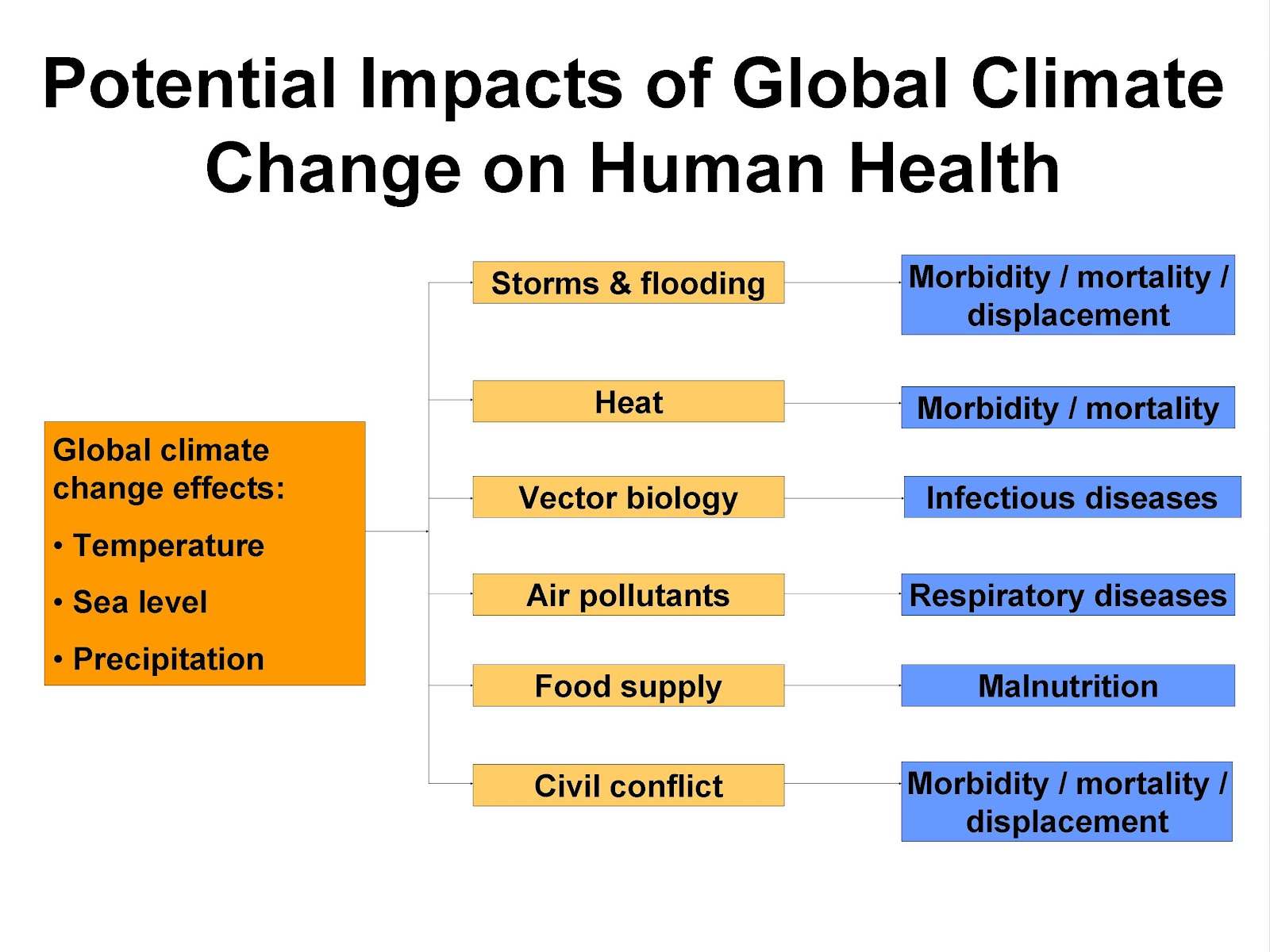
There is scientific evidence showing a direct influence of inter-annual and inter-decadal climate variability on the epidemiology of vector-borne diseases (WHO, 2000). Climate change has been shown to enhance the spread of infectious diseases two key mechanisms, according to (Epstein, 2011):
1)Global warming expands the geographic conditions conducive to transmission of vector-borne diseases, and
2)Extreme events result in the proliferation of mosquito, water and rodent-borne diseases
A study carried out in Lusaka (Zambia) between 2003 and 2006 analyzed data from three cholera epidemics which occurred in a consecutive fashion. The researchers from the Madrid Carlos III Institute of Health who conducted the study concluded that climatic variables (rain and environmental temperature) are related to the increase in cholera cases during the epidemic period. The results showed that increase in environmental temperature six weeks before the rain season increases the number of people affected by this sickness by 4.9%.
In a study of Vibrio cholera, the bacteria that causes cholera, in the environment, the bacteria was found in water bodies untouched by human waste, its abundance and distribution fluctuating not with levels of contamination, but with sea surface temperature, ocean currents, and weather changes. A 2003 WHO study warned that predicted warming of African lakes, such as Lake Tanganyika, may increase the risk of cholera transmission among local people, and that countries such as Tanzania, Kenya, Guinea-Bissau, Chad, Somalia, Peru, Nicaragua, and Honduras — which suffered major cholera outbreaks after heavy rains in 1997 — may face more cholera epidemics as the climate changes (Shah 2011).
It seems the evidence is becoming so overwhelming. According to Shah (2011) “In Mexico, the abundance of cholera vibrios in lagoon oysters rise as seas warm. In the Chesapeake Bay, Vibrio cholerae levels increase during the summer, as water temperatures spike. In Bangladesh, cholera risk increases by two to four times in the six weeks following a 5-degree C (9-degree F) spike in the water temperature. Likewise, in Ghana, an analysis of 20 years of data revealed a correlation between cholera incidence and rainfall and land surface temperatures. In Djibouti, Somalia, Kenya, Mozambique, and Tanzania, cholera epidemics have been correlated with flooding as well as sea surface temperatures”
As the impacts of climate change on diseases become increasingly prominent, the need to put in place structures and mechanisms to ensure health care systems are well positioned to respond effectively cannot be over-emphasised. How can the health care system, especially in developing countries, respond appropriately to climate change related health risks?
"This is the first time that it has become evident in the sub-Saharan region that the increase in environmental temperature is related to the increase in cholera cases," - Miguel Ángel Luque, Madrid Carlos III Institute of Health
References:
Epstein, P., 2011. Health and Climate Change: 7 Ways You Are Being Harmed in The Atlantic, Sept. 23, 2011 Edition.
Fernándeza, M.A.L., Bauernfeindb, A., Jiménezc, J.D., Gila,C.L., El Omeiria, N., Dionisio Herrera Guiberte, D.H., 2009. Influence of temperature and rainfall on the evolution of cholera epidemics in Lusaka, Zambia, 2003–2006: analysis of a time series. Transactions of the Royal Society of Tropical Medicine and Hygiene. Volume 103, Issue 2. Pages 137–143
Government of Ghana, 2007. National Health Policy: Creating wealth through health. Ministry of Health. Accra, Ghana.
Shah, S., 2011. Climate’s Strong Fingerprint in Global Cholera Outbreaks. Environment360. http://e360.yale.edu/feature/climates_strong_fingerprint__in_global_cholera_outbreaks/2371/
World Health Organization Bulletin, 2000. Climate change and vector-borne diseases: a regional analysis. http://www.who.int/mediacentre/news/releases/2008/pr28/en/index.html [Accessed: June 19, 2012]
Wednesday, September 5, 2012
GEOENGINEERING TO THE RESCUE?
“Homo sapiens has emerged as a force of nature rivaling climatic and geologic forces,” Erle Ellis
"Geo-engineering" as a solution to climate change is increasingly gaining attention within the science world. "Isn’t it just one of those things that come up and everyone seems excited about only to learn later that it can’t really help after all?”, I asked myself the first time I read about geoengineering. So what is this technology that is gradually becoming the main word in climate change talks?
The concept of GEOENGINEERING refers to "the deliberate large-scale intervention in the Earth’s climate system, in order to moderate global warming". The definition of geoengeneering in itself seemed ironic to me, upon first hearing. How can anyone possibly make any meaningful interventions in the climate system which is so complex that I am yet to come across someone who can claim to fully understand it! Then the Intergovernmental Panel on Climate Change concluded in 2007 that geoengineering options remained largely unproven. Such is the controversy surrounding geongeneering.
But why should anyone not be happy with what appears to have solution to arguable the greatest challenge the world faces: CLIMATE CHANGE. The world has been grappling with this challenge for a while now. Climate change MITIGATION, activities that reduce greenhouse gas (GHG) emissions, or enhance the capacity of carbon sinks to absorb GHGs from the atmosphere, has been proposed several years ago and we are still grappling with it. Climate Change ADAPTATION, i.e., reducing the negative impacts of climate change and take advantage of any opportunities is also being tried and its successes are there for all to see. It has been extremely difficult and sometimes even thought of as impossible to build the international political consensus on how and to what levels to reduce GHG emissions. Talk of adaptation is equally discouraging. So, with all these challenges with mitigation and adaptation, are we now closer to what will save the world?
Geoengeneering is divided into two broad categories:
1.Carbon dioxide removal (CDR) techniques which address the root cause of climate change by removing greenhouse gases from the atmosphere; and
2. Solar radiation management (SRM) techniques which attempt to offset effects of increased greenhouse gas concentrations by causing the Earth to absorb less solar radiation.
CDR techniques will reduce the levels of carbon dioxide (CO2) in the atmosphere, allowing outgoing long-wave (thermal infra-red) heat radiation to escape more easily. SRM techniques will reduce the net incoming short-wave (ultra-violet and visible) solar radiation received, by deflecting sunlight, or by increasing the reflectivity (albedo) of the atmosphere, clouds or the Earth’s surface. These are surely what the world needs to address climate change, don’t you think so? At last, we are going to win the battle with climate change! Well, don’t be too fast to conclude, does geoengineering not have any negatives?
Some of the few studies into geoengineering has revealed that despite all the positives, including counteracting many effects of climate change, that are touted about Geoengineering, there could be unintended negative repercussions as well. The climate system is inherently too complex and the possibility of unanticipated harmful side effects must be expected. In their book “GEOENGINEERING FOR DECISION MAKERS” the Woodrow Wilson International Center for Scholars, lists the ten (10) major concerns of Geoengineering as:
1.Unintended Negative Consequences
2.Potential Ineffectiveness
3.Risk of Undermining Emissions-Mitigation Efforts
4.Risk of Sudden Catastrophic Warming
5.Equity Issues
6.Difficulty of Reaching Agreement
7.Potential for Weaponization
8.Reduced Efficiency of Solar Energy
9.Danger of Corporate Interests Overriding the Public Interest
10.Danger of Research Driving Inappropriate Deployment
These concerns, some of which have been addressed partially by some studies, are important and need addressing before any large-scale deployment of geoengineering technologies is undertaken.
So is geoengenieering to the rescue? It’s time for us to think, work and engage. Maybe YES, maybe NO. What do you think?
"Before we start geoengineering we have to raise the following question: are we sufficiently talented to take on what might become the onerous permanent task of keeping the Earth in homeostasis? Consider what might happen if we start by using a stratospheric aerosol to ameliorate global heating; even if it succeeds, it would not be long before we face the additional problem of ocean acidification. -- James Lovelock
"Geo-engineering" as a solution to climate change is increasingly gaining attention within the science world. "Isn’t it just one of those things that come up and everyone seems excited about only to learn later that it can’t really help after all?”, I asked myself the first time I read about geoengineering. So what is this technology that is gradually becoming the main word in climate change talks?
The concept of GEOENGINEERING refers to "the deliberate large-scale intervention in the Earth’s climate system, in order to moderate global warming". The definition of geoengeneering in itself seemed ironic to me, upon first hearing. How can anyone possibly make any meaningful interventions in the climate system which is so complex that I am yet to come across someone who can claim to fully understand it! Then the Intergovernmental Panel on Climate Change concluded in 2007 that geoengineering options remained largely unproven. Such is the controversy surrounding geongeneering.
But why should anyone not be happy with what appears to have solution to arguable the greatest challenge the world faces: CLIMATE CHANGE. The world has been grappling with this challenge for a while now. Climate change MITIGATION, activities that reduce greenhouse gas (GHG) emissions, or enhance the capacity of carbon sinks to absorb GHGs from the atmosphere, has been proposed several years ago and we are still grappling with it. Climate Change ADAPTATION, i.e., reducing the negative impacts of climate change and take advantage of any opportunities is also being tried and its successes are there for all to see. It has been extremely difficult and sometimes even thought of as impossible to build the international political consensus on how and to what levels to reduce GHG emissions. Talk of adaptation is equally discouraging. So, with all these challenges with mitigation and adaptation, are we now closer to what will save the world?
Geoengeneering is divided into two broad categories:
1.Carbon dioxide removal (CDR) techniques which address the root cause of climate change by removing greenhouse gases from the atmosphere; and
2. Solar radiation management (SRM) techniques which attempt to offset effects of increased greenhouse gas concentrations by causing the Earth to absorb less solar radiation.
CDR techniques will reduce the levels of carbon dioxide (CO2) in the atmosphere, allowing outgoing long-wave (thermal infra-red) heat radiation to escape more easily. SRM techniques will reduce the net incoming short-wave (ultra-violet and visible) solar radiation received, by deflecting sunlight, or by increasing the reflectivity (albedo) of the atmosphere, clouds or the Earth’s surface. These are surely what the world needs to address climate change, don’t you think so? At last, we are going to win the battle with climate change! Well, don’t be too fast to conclude, does geoengineering not have any negatives?
Some of the few studies into geoengineering has revealed that despite all the positives, including counteracting many effects of climate change, that are touted about Geoengineering, there could be unintended negative repercussions as well. The climate system is inherently too complex and the possibility of unanticipated harmful side effects must be expected. In their book “GEOENGINEERING FOR DECISION MAKERS” the Woodrow Wilson International Center for Scholars, lists the ten (10) major concerns of Geoengineering as:
1.Unintended Negative Consequences
2.Potential Ineffectiveness
3.Risk of Undermining Emissions-Mitigation Efforts
4.Risk of Sudden Catastrophic Warming
5.Equity Issues
6.Difficulty of Reaching Agreement
7.Potential for Weaponization
8.Reduced Efficiency of Solar Energy
9.Danger of Corporate Interests Overriding the Public Interest
10.Danger of Research Driving Inappropriate Deployment
These concerns, some of which have been addressed partially by some studies, are important and need addressing before any large-scale deployment of geoengineering technologies is undertaken.
So is geoengenieering to the rescue? It’s time for us to think, work and engage. Maybe YES, maybe NO. What do you think?
"Before we start geoengineering we have to raise the following question: are we sufficiently talented to take on what might become the onerous permanent task of keeping the Earth in homeostasis? Consider what might happen if we start by using a stratospheric aerosol to ameliorate global heating; even if it succeeds, it would not be long before we face the additional problem of ocean acidification. -- James Lovelock
Subscribe to:
Posts (Atom)