CONTACT:

@BenjiGyampoh

Tuesday, March 1, 2011

International Year of Forests: Focus on Ghana’s Forests


“Man is preceded by forest and followed by desert” – French Proverb.

Fifty-four (54) years ago, Ghana gained independence from British colonial rule. Each year, huge amounts of money are spent to celebrate our independence anniversaries, including the famous “Ghana@50”. After Ghana@50, a probe was set up to investigate how those monies were managed. That’s great! I wish that Ghanaians start taking keen interest in probing how we have managed the various sectors of our country. How we have managed our natural resources should engage our attention at the highest level. Ghana is well endowed with several natural resources including tropical rainforests, which has been a major source of revenue for the country. Ghana’s forests have influenced its climate, soil and water resources which have supported Ghana’s agricultural sector, the backbone of the country’s economy. Cocoa, which has been so central to Ghana’s development, has been influenced by the forest’s micro-climate.

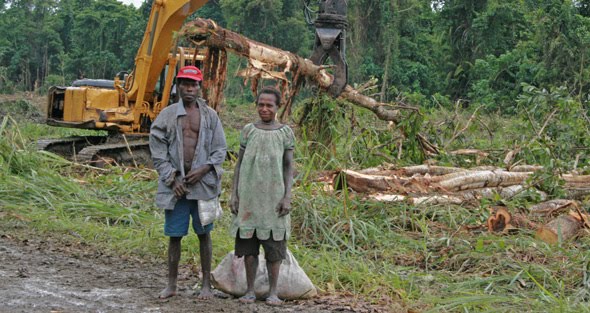
With such a critical role being played by forests, it just stands to reason that more effort will be channelled into making this resource sustainable and stay in good shape. However, sustainable management of Ghana’s forest has been a major issue for successive governments since colonial times. Available records indicate that at the beginning of the last century, a third of Ghana’s total land area of 238,540 squared kilometres was covered by high forest whiles the remaining land was covered by savanna woodland (Antwi, 1999). Unfortunately, this forest cover has seen rapid depletion in the last 100 years; especially in the last 50 years where sustainable forest management is being trumpeted everywhere.

One cannot think of achieving sustainable forest management without policies to guide decision making on the use of the resource and legislation to provide legal backing to those policies (Owusu, 1999); and that is an area Ghana is not new to. As early as 1908, a report on Ghana’s forests was presented to the colonial government by H.N. Thompson in which he recommended establishment of a Forestry Department; creation of forest reserves; and some regulation of timber felling and exports. Thompson’s report formed the basis for the colonial government’s forest policy. After the recommendations from Thompson, there has been several interventions in the form of ordinances, policies and legislation all aimed at regulating activities in the forest sector but little seems to have been achieved. Some have attributed the reduction of Ghana’s forest to the failure of Ghana's Forestry policies and strategies to ensure that forest resources were managed on economically viable, socially beneficial and environmentally sound principles.

This year, 2011, is the United Nations’ International Year of Forests, under the theme: “Celebrating Forests for People”. Let’s throw more light on Ghana’s forests. Ghana is having a fair share of global environmental problems: change in weather patterns; recurrent droughts severely affecting agricultural activities; flooding; soil erosion; habitat destruction which is threatening biodiversity; water pollution; decreasing river discharge and inadequate supplies of potable water. How does the disappearance of our forests fit into this puzzle? What should be done to sustainably manage our forests?

“The forest will answer you in the way you call to it” – Finnish Proverb.

References:
Antwi, L. B., (1999). What we have: Our Forest Heritage. Proceedings, Workshop for Media Personnel on Forestry and Wildlife Reporting. IRNR-UST, 6-11 June 1999.
Owusu, J. G. K., (1999). Policies and Legislation concerning Forests, Forestry and Wildlife. Proceedings, Workshop for Media Personnel on Forestry and Wildlife Reporting. IRNR-UST, 6-11 June 1999.

Wednesday, February 9, 2011

Ghana Meteorological Agency (GMet) and the climate change adaptation process


The impact of changing climate in Ghana is so evident even to the ordinary man on the street. One does not have to be a farmer who depends on solely rainfall to plant his crops to notice that there has been a major change in our rainfall pattern. The excessive heat in recent years is felt by all and how many of us have not paused once to wonder how warm our world is becoming? Some of us living in the urban areas like Accra and Kumasi may not be depending directly on streams and rivers for our water needs like the people in Adubinsu and Mmoframfaadwen do, so we may not be seeing at first hand the drying of streams and rivers. However, since our water invariably comes from dams built on rivers whose sources are drying up, we are equally vulnerable.

Whether we stop producing greenhouse gases (very impossible) or not, we are already committed to some level of climate change and there is the need to adapt to these changes since we have nowhere else but this earth to stay. How then can Ghana adapt to the impacts of climate change? Effective adaptation to impacts of climate change requires a careful assessment of impacts of and vulnerability to climate change and subsequently working out adaptation needs of the people. A critical requirement of such an exercise is good quality information. This is where the usefulness of institutions such as the Ghana Meteorological Agency (GMet) cannot be over-emphasised. GMet is mandated to collect climatic information for further development into useable products for the country. Where the capacity for collecting such relevant information and assessing climate change is not adequate, our ability to plan adaptation measures and adapt effectively becomes highly constrained.

A cursory look around the few GMet stations scattered around the country will give even a day-old baby an idea of how resourced the agency is in leading the country’s adaptation efforts. Ghana cannot go on like this. We cannot plan adaptation strategies in a vacuum! We cannot just guess what is likely to happen by how we feel or what some people elsewhere say. We need to know the current situation to project what is likely to happen in the future judging from the current situation, before any meaningful climate change adaptation strategies can be planned. This entails improved observations; improved regional, national and global data, as well as denser networks; recovery of historical data; building of support among user communities that have a demand for climate information; and promoting greater collaboration between providers and users of climate information.

My contact with the Ghana Meteorological Agency (GMet) has always left me thinking about how serious Ghana is when it comes to issues of climate change; something that threatens food production and water resources, life and death. GMet needs major attention. This agency is critical to the security of our country! Some serious attention should be paid at providing the Agency with the needed equipment for effective climate observation. There should be more observation stations in many parts of the country to ensure effective monitoring. GMet staff needs regular and constant upgrading to help them catch up with the fast evolving field of climate science. The many self-motivated, hardworking and enthusiastic young men and women at the agency has should be helped to help this country.

Friday, January 21, 2011

SETTING PRECEDENCE IN MANAGING FUTURE OIL SPILLAGE DISASTERS


In December 2009, Kosmos Energy was reported to have spilled about 600 barrels of low toxicity oil-based mud in its exploratory operations in the Jubilee Fields in Ghana. That was not all, between that time and May 2010, two other discharges of Low Toxicity Oil Based Mud (LTOBM) was said to have been discharged by Kosmos Energy into the marine waters of Ghana. With this kind of spillage at this early stage of commercial oil drilling in Ghana, I was dismayed as an environmentalist but was also that this was a good time for Ghana to get things right once and for all. I was convinced that the sad state in which gold mining has left most of our communities will propel the government of the day, into whose hands the managing of this country has been entrusted, to wake up and put things right in the oil sector.

A committee was set up by the Environment Minister to investigate the causes of the spillage and recommend punitive measure where necessary. I was very glad that such a bold step was being taken. This was no small committee as it had membership from the Ghana Maritime Authority, the Environmental Protection Agency and the Commission on Human Rights and Administrative Justice, and the Ghana Environmental Conventions Coordinating Authority. It was chaired by the deputy minister of Environment. After several meetings and consultations, the committee established that the unfortunate spillages were as a result of negligence on the part of Kosmos Energy and made recommendations on how to prevent and handle issues related to oil spillage in future. Accordingly, Kosmos Energy was fined an amount of 35 million dollars. I was glad when that news came up!

Then the actual story began: Kosmos Energy writes a strong-worded letter to the Attorney-General and Minister for Justice, copied to the president of Ghana in which they are said to have described the fine as “totally unlawful, unconstitutional, ultra vires and without basis” and ask the Attorney-General to use her “best offices and endeavours to halt a process that legally and procedurally is fatally flawed”. Well, I am not a lawyer and will not attempt to interpret the big words used here. However, one thing was clear, Kosmos Energy refuses to pay! And what did the government do? The government seemed clueless and helpless! Poor Ghana! A company operating in our Country has been found to have negligently caused harm to our marine resources and has been fine; and the country rubbishes the government’s decision to fine them. They do not defend themselves as saying they did no such thing but rather question the power of the Minister under our constitution or any other law of Ghana to impose a fine on any person in the event of an oil spillage. Isn’t this too interesting? How prepared are we as country in handling this oil thing? It is not enough to mine the oil, the effects of such an activity on our life should be paramount but we are bent on failing and nothing seems to stop us.

I had not giving up yet. I was still convinced that Ghana will set a good precedence. Then on December 20, 2010, I heard the news “KOSMOS ENERGY REACHES SETTLEMENT AGREEMENT WITH GHANAIAN GOVERNMENT AND GHANA NATIONAL PETROLEUM CORPORATION”. A part of the press release by Kosmos energy read “Separately, Kosmos and the Ministry of Science, Environment and Technology have agreed to a solution with respect to the “accidental mud discharges” offshore Ghana earlier this year whereby Kosmos would support the Ministry’s efforts to build capacity in the environmental sector. Folks, that was all. That was all! We have set precedence. Whether it is a good precedence or not is for all of us to think about.

Ghana, as a country is so blessed in several dimensions. Wherever one turns to, the signs of the blessings of God upon this country are evident. However, Ghanaians have over the years worked so hard to ridicule the God who has blessed us so abundantly by turning all that is provided for our good into despicable disasters. But through this all, we are always giving an undeserving second, or I think by now we have even reached the hundredth, chance to get it right. But we seem so bent on getting it wrong that nothing seems capable of stopping us.